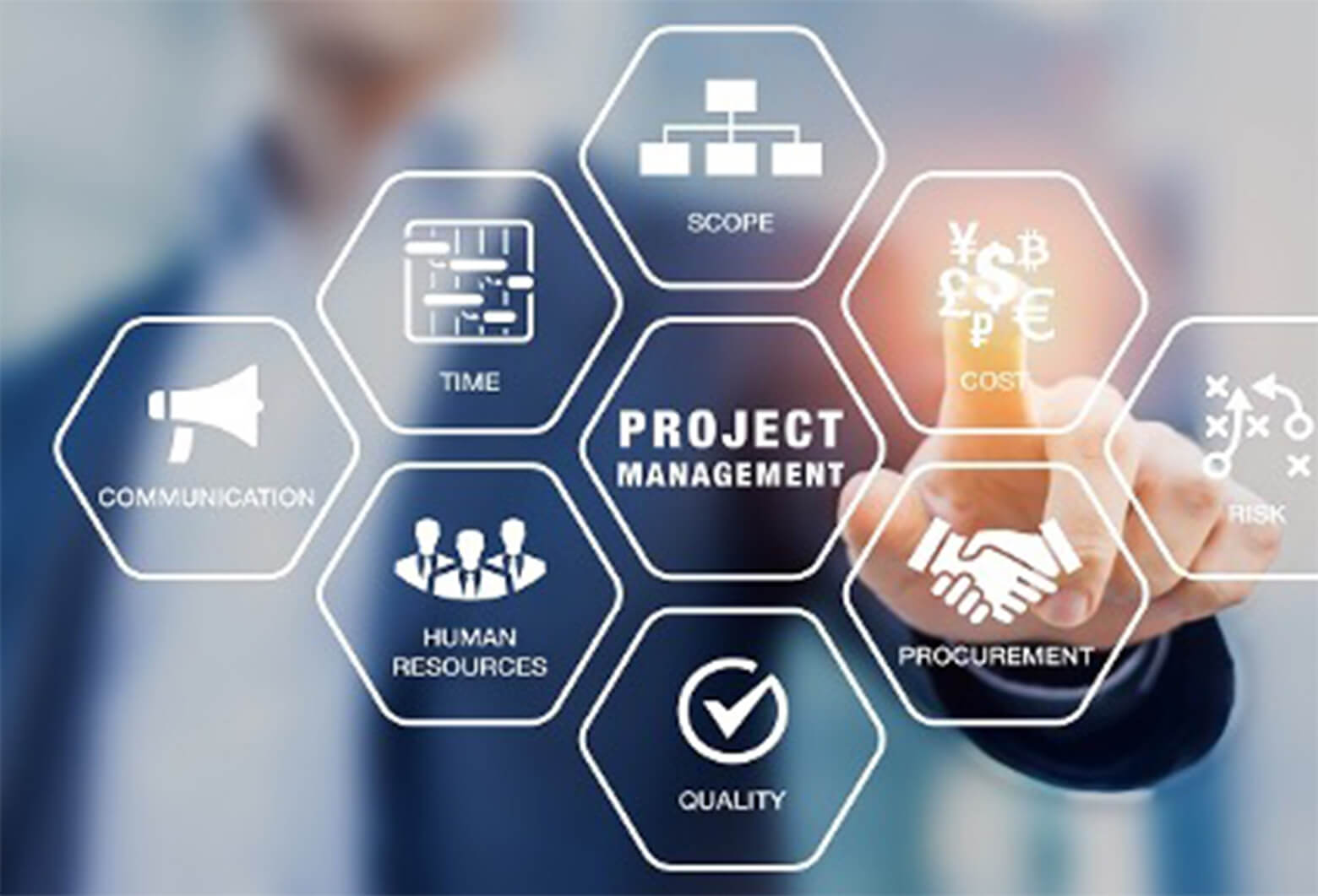
It is no exaggeration to say that a project’s success hinges on the PMO (Project Management Office) and its ability to coordinate on-site work and maintain a smooth, efficient working environment under the PM’s (Project Manager’s) direction.
This article introduces how one member grew from a complete beginner into a trusted PMO, steadily gaining certifications and skills through hands-on project experience.
1) Motivation for choosing a PMO career path, and the approach to acquiring relevant experience
I originally aimed for an infrastructure engineer where I could apply my previous experience, but during the interview I was told I might be better suited to PMO, and that was the role I was ultimately hired for. I knew very little about PMO work at the time, so once I decided to join Avaxia, I started learning everything from scratch.
Once I received the offer, I researched from books and online resources to learn what a PMO actually does, such as role and responsibilities, so that I would be ready before my first day.
When I first joined the project, I learned by watching how senior PMO members worked. Once I understood the project’s progress and each member’s personality, I began adjusting my own approach so that things were easier to follow and work smoothly.
Whenever I introduced something new, I checked with senior colleagues first and take their advice into my plans. Over time, I could dispatch client requests and assign the right internal members considering the PM’s intentions, which built my confidence in my own judgment. Drawing on their experience also helped me make sure new approaches never disrupted the project or the team, keeping the work on track.
Through all this, I learned to seek out knowledge on my own in unfamiliar areas while drawing on the people around me to keep improving.
2) What does PMO work involve, and what makes it rewarding?
I am primarily assigned to projects, where I manage project operations for the PM and for external and internal members to keep things running smoothly.
Externally, I visualize technical explanation that are hard to put into words, helping engineers deliver for clients, and I support regular reporting during incidents. I prepare meeting materials and minutes, facilitate meetings when needed, and act as the client contact point, organizing inquiries and issues and aligning understanding among everyone involved.
Internally, I help the whole team work smoothly by managing work processes, tracking task progress, arranging role assignments, and facilitate internal meetings. I also handle scheduling, issue, and risk management across the project, detecting early issues and countermeasures, and I support the PM’s decisions by keeping management documents and progress up to date and visible.
In addition, with the aim of improving the overall quality of the project, we treat everything visible to the client, including daily responses and submitted documents as our company’s deliverables. To ensure quality over these deliverables, I am responsible for coordinating reviews, supporting the operation of quality management processes, and communicating with related departments.
All technical content is always verified by senior members. On the PMO side, I check whether the designated format has been used correctly, whether client questions have been answered accurately, and whether the wording reads naturally from the perspective of a Japanese client. What is considered common sense in one culture may come across as unnatural in another. This kind of alignment may be a scenario particularly characteristic of a foreign-affiliated company, where members from diverse cultural backgrounds work together.
By accurately grasping the status of the project and sharing appropriate information with stakeholders, I contribute myself to the smooth progress of the project.
When I first started as a PMO, I struggled to help members from other countries understand Japanese workplace customs and our approach to client communication. For example, when a client sets a deadline, it is common in Japan to give frequent progress updates along the way. This reassures the client and detect potential delays early. It took time for non-Japanese members to grasp and adopt this practice, but through ongoing support, in which I repeatedly explained the reasons behind it, they gradually began sharing updates on their own, and client communication improved.
We also had a recurring issue: Our answers were not fully answered at the first point. To fix this, I reviewed client feedback and members’ draft responses with them, helping them anticipate likely follow-ups and address them from the start. This process deepened my own technical understanding and helped members learn to read the client’s intent and include the right information proactively, sharpening their technical knowledge too. In the end, we cut client follow-up questions by 50%, which strengthened the client’s trust in us and made project management smoother overall.
Another challenge was that internal requests tended to be deprioritized against client-facing work, so tasks often missed their deadlines. Knowing how busy members already were, I sometimes hesitated to send reminders, but without those tasks done, my own work couldn’t move forward either, and my chat threads with members who were behind filled up with reminder after reminder.
When I raised this with a colleague, my colleague told me that since members already understood the PMO’s role, there was no need to hesitate about sending deadline reminders. That helped me see that deadline management and follow-up are, in fact, key responsibilities for keeping a project on track, and I became able to reach out appropriately when needed.
As a result, I improved deadline compliance while keeping good relationships with the team, which let my own work run more smoothly. Through this, I learned the importance of balancing consideration for others with effective project management, and of reaching out proactively when necessary. Working with members from diverse backgrounds also helped me communicate with an understanding of different cultures and values.
3) Qualifications obtained through PMO work, and steps taken to advance from Jr. PMO to Confirmed PMO
I have currently obtained project management-related certifications that are widely recognized in industry, such as ITIL and COBIT, and I am strengthening my skills through a combination of hands-on experience and systematic knowledge in areas like incident management and process management. Going forward, I aim to continue learning so that I can become a PMO capable of adapting flexibly to a variety of projects. I also intend to maintain a continuous drive for improvement, actively proposing improvement initiatives and driving them forward to contribute to the team’s overall quality.
To grow as a PMO, I actively studied the progress management methods, stakeholder coordination techniques, and meeting facilitation skills that senior members put into practice. Rather than simply understanding these as knowledge, I made a point of applying them myself and repeating the process until I could use them naturally. As a result, I was able to develop the adaptability to select the appropriate approach depending on the situation and keep projects running smoothly.
Through this experience, I also learned that the scale, structure, client requirements, and team composition can vary significantly from project to project, meaning the same approach doesn’t always work. For this reason, I believe it’s important not to rely solely on hands-on experience, but also to systematically learn project management best practices.
4) Regarding the high importance attributed to PMO work
Looking ahead, I believe AI will significantly streamline parts of PMO work. Routine tasks such as writing minutes, sending deadline reminders, and consolidating progress reports can be automated or AI-assisted. AI should be actively used here, not only to save time but to free us for higher-value work.
At the same time, the PMO role goes beyond organizing and sharing information. It means continuously tracking what was decided in meetings and moving the project forward while preventing misalignment among stakeholders. Understanding each member’s situation and offering follow-up or coordination at the right moments is just as essential. These responsibilities call for communication that builds trust by grasping others’ perspectives, and the ability to balance the interests of diverse stakeholders. Projects often carry underlying context and emotions that surface-level information can’t capture, which is why I believe AI alone cannot fully replace this role for now.
What clients trust, moreover, is not AI itself but the people and organizations delivering the service. The PMO stands between client and project team, working to understand both sides’ expectations and challenges to keep things moving smoothly. So while AI can improve efficiency, I believe the PMO role, with its uniquely human communication, coordination, and problem-solving at its core, remains important and indispensable to any project.
5) What was achieved through PMO work at Avaxia
Through my PMO work, I have further strengthened my ability to take a comprehensive view of the project, organize information effectively, and summarize complex content in a clear, easy-to-understand way for stakeholders. Through progress and issue management, I also learned the importance of aligning understanding among stakeholders in order to keep projects moving forward smoothly.
For team-wide tasks, I carefully aligned expectations with stakeholders and managed the work from the preparation stage on, identifying potential risks and planning countermeasures in advance. As a result, work proceeded as planned with no major issues or rework, and each member could reliably fulfill their role, letting us complete every project to date successfully.
In addition, by facilitating smooth coordination among stakeholders and managing progress at each stage, we were able to shorten the work by approximately three hours compared to the original plan, which was originally planned for 10 hours including a potential rollback (reverting changes in the event of issues during the change process). Completing the work ahead of schedule and in a stable condition earned positive feedback from the client, including comments such as “we felt confident leaving the work in your hands” and “it was a great help to have things handled so smoothly.” This feedback gave the whole team a strong sense of confidence.
Avaxia Asia is looking for colleagues who want to grow together with us. If you’re interested, please feel free to contact us.
Link: https://avaxia-asia.co.jp/en/contact/